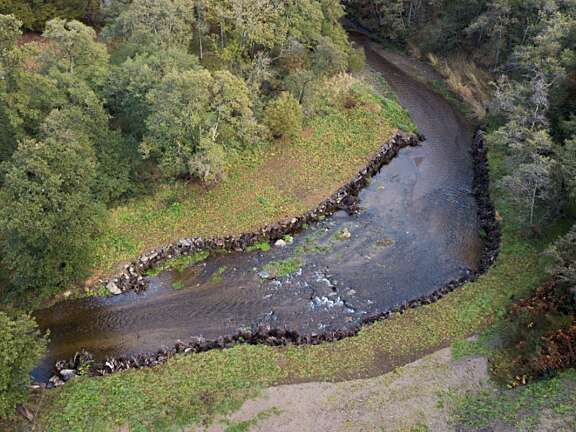
What do we really mean when we talk about nature‑based solutions?
‘Nature-based solutions’ (NbS) come up more and more in conversations about climate, water and infrastructure. But what are they? And how can they help restore our rivers, landscapes and biodiversity?
13/07/26
‘Nature-based solutions’ (NbS) is a phrase you hear more and more in conversations about climate, water and infrastructure. It sounds intuitive - but it can also feel a bit vague. So, what do we actually mean when we use it? The Rivers Trust Communications & Advocacy Director, Tessa Wardly, breaks it down.
A simple definition: What are nature-based solutions?
At its core, nature-based solutions are about working with nature, harnessing the benefits of healthy functioning natural systems rather than working against it, to solve real-world problems.
A widely used definition from the International Union for Conservation of Nature is a good place to start: NbS are actions that protect, restore, or sustainably manage ecosystems to address societal challenges, while benefiting both people and nature. Those ‘challenges’ include things we’re all grappling with - flooding, drought, water quality, rising temperatures, climate change, and biodiversity loss.
The key is that nature isn’t just something we protect; it becomes part of the infrastructure that helps solve the problems that have a profound effect on people’s everyday lives, local communities, economies, and ultimately stifle growth.
Nature as critical infrastructure
Traditionally, we’ve tended to rely on ‘grey infrastructure’ - pipes, concrete channels, flood walls and reservoirs - to manage water.
Nature‑based solutions don’t replace these - they are much needed. But they can complement them, for example by taking some of the pressure off the system and reducing the capacity required from ‘grey infrastructure’. In some cases, they may be so effective they can substitute them, restoring the natural processes that already regulate water.
For example, nature-based solutions can:
- Slow and store water in landscapes
- Improve infiltration and groundwater recharge
- Reduce pollution and sediment reaching rivers
- Regulate flows through catchments
- Even out temperature peaks and troughs
In other words, instead of forcing water and sewage through engineered systems as quickly as possible, NbS aim to rebuild the landscape’s ability to manage water naturally, taking the strain off the engineered systems.
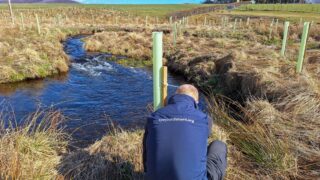
From a single field to whole catchments
One of the things that makes NbS powerful, and sometimes hard to define, is their scale.
They can be small changes in land management like planting cover crops or buffer strips, local interventions like a wetland or a rain garden, or they can be landscape‑scale schemes across entire river catchments.
This reflects an important shift in thinking: water doesn’t behave in neat administrative boundaries - it moves through landscapes. So, solutions increasingly need to, and can, do the same.
Natural flood management is a good example
A great way to understand NbS in practice is through natural flood management (NFM). NFM is essentially a subset of nature‑based solutions focused on flooding. It works by protecting, restoring, or mimicking natural processes to reduce flood risk.
- Instead of relying only on flood walls, NFM uses measures like:
- Restoring healthy soils.
- Restoring wetlands and floodplains
- Planting woodland upstream
- Reconnecting rivers to their natural courses
- Creating small features like “leaky dams” to slow flows
- These measures store water, spread it out, and slow it down, reducing the peak of flood downstream, protecting farm land, road and rail services, businesses, and communities.
Crucially, they often also deliver much more than flood protection, improving biodiversity, water quality, and soil health at the same time. Many also contribute to net zero by absorbing greenhouse gases and avoiding the use of concrete and other carbon-hungry manufactured products.
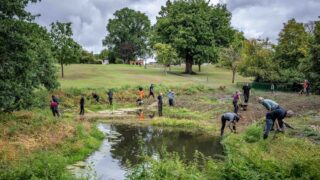
Multiple benefits: the real value of nature-based solutions
One of the strongest messages from the evidence base is that NbS are rarely ‘single‑purpose’.
Instead, they offer multiple, overlapping benefits. For example, a restored wetland might:
- Reduce flood risk
- Filter pollutants and improve water quality
- Provide habitat for wildlife
- Store carbon
- Store water in the landscape to alleviate drought and fire risk
- Create accessible green space for people.
This idea of “benefit stacking” is central to the case for NbS. Rather than solving one problem in isolation, they address several at once. And that means better value for money, more efficient delivery, with less burden on consumers and the taxpayer - altogether more bang for your buck. It also means that NbS schemes can attract funding from multiple sources, enabling them to be scaled up. Engineered solutions tend to solve only one problem.
NbS can support both drought and flooding at the same time
It might seem counterintuitive, but nature‑based solutions can help tackle both too much water and too little at the same time. By improving soil structure, restoring wetlands, and increasing vegetation, NbS can store water during wet periods to be released slowly during dry periods. They help build resilience to drought by enhancing natural water storage and groundwater recharge. In a changing climate with whiplash weather that swings rapidly from intense rainfall to extended dry spells, this dual role is becoming increasingly important.
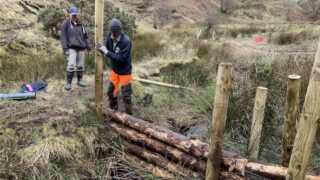
They're not a silver bullet, but they're a vital part of the mix
It’s important to be clear: NbS aren’t a magic fix; they cannot solve every challenge in every place, but they almost always have a role to play.
Their effectiveness can vary depending on location, scale, and design — strong evidence, good planning, and ongoing management are essential.
In many cases, the best approach is a hybrid one, combining traditional engineering, nature‑based solutions, and smarter land management.
But to use NbS to their potential, we need to shift our mindset
Ultimately, when we talk about nature‑based solutions, we’re not just talking about specific interventions. We’re talking about a different way of thinking: seeing rivers, soils and ecosystems as part of our infrastructure; planning at the scale of whole landscapes and catchments; designing solutions that work with natural processes, not against them; and working with all parties who impact on and benefit from well-functioning natural processes.
As Natural England often frames it, working with nature to deliver benefits for people, climate, and biodiversity at the same time.
Why does this matter now?
With increasing pressure on water quality, water resources, a rising flood and drought risk, and accelerating biodiversity loss that is impacting on our local economies and growth potential, NbS offer a way to tackle multiple crises together.
They won’t replace everything we already build - but they change the role of nature from something we protect on the side, to something we actively depend on. And that shift could be one of the most important transformations in how we manage water in the years ahead.
Join our newsletter
Sign up to receive our supporter newsletter and get monthly updates on our work, campaigns, news (and future competitions!) directly to your inbox.